Vehicle Towing and Recovery Methods
Before towing the vehicle, complete the following steps:
- Disarm the Shock and Tilt alert system using the Lucid Mobile App or the Pilot Panel:
- From the Pilot Panel, go to Safety and Security > Shock & Tilt > Disarm
- Turn OFF Passive Lock/Unlock in the
Pilot Panel:
- Go to Settings > Vehicle > Passive Lock/Unlock > OFF
Disarming Shock and Tilt only disables the alert system for one time. If the vehicle is unlocked or entered again before towing is complete, the disarm process must be repeated.
Ensure that the key fob is not kept in a pocket or interacted with during towing.
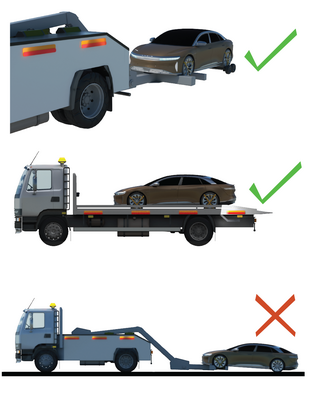
Lucid prefers the use of the Rollback truck (Flatbed) that includes the Self-Loading Recovery Dolly, Tow Eye or Tow Strap.
1. High-Speed Dolly
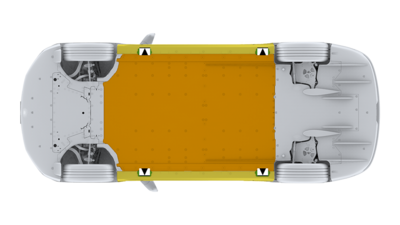
High-speed dolly systems support the vehicle’s rear wheels, while a tow vehicle supports the front wheels. This is Lucid’s recommended recovery option for short distances.
Always follow recovery equipment’s manufacturer instructions for use.
2. Self-Loading Recovery Dolly
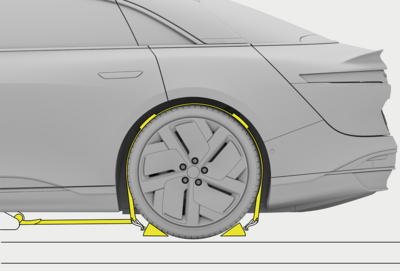
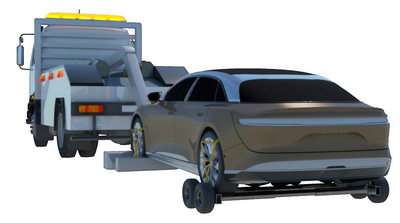
Self-loading dolly systems allow winching a vehicle onto a flatbed carrier or rollback tow truck. They incorporate an attachment point for the winch cable directly to the dollies. Use this method when wheels are locked (e.g., due to power loss). Self-loading dollies support all wheels during winching to reduce the risk of vehicle damage.

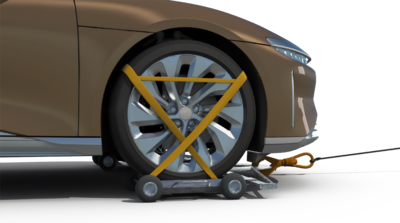
Make sure to secure the vehicle onto the bed as per the dolly’s manufacturer instructions, with the vehicle remaining on the dollies.
See detailed instructions under Securing Vehicle for Transportation.
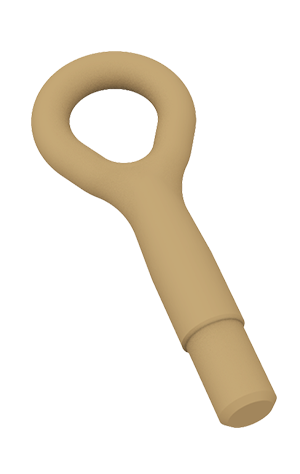
4. Tow Eye / Tow Strap
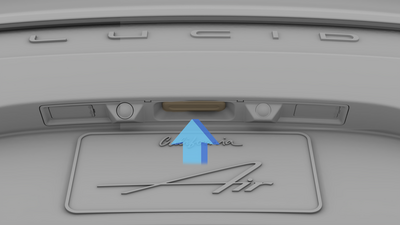
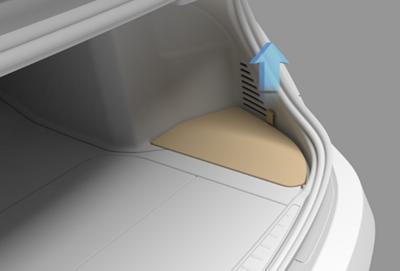
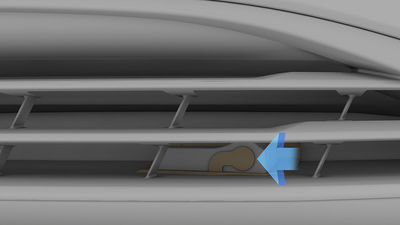
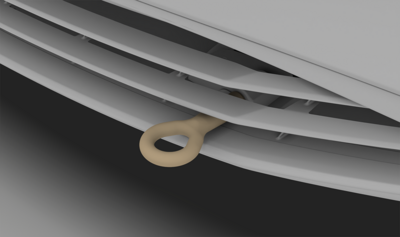
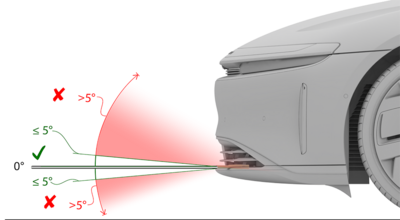
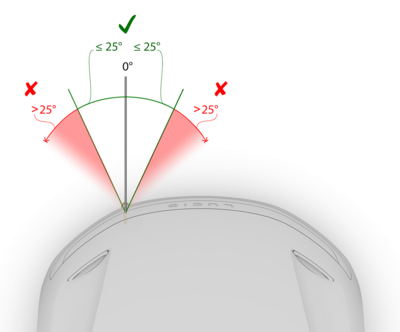
The tow eye or strap can only be used at the front of the vehicle, but has load limitations (13.9kN/ 1426kg/ 3100lbs) with vertical and horizontal angular limitations for the operation of the winch cable relative to the location of the tow eye or strap attachment.
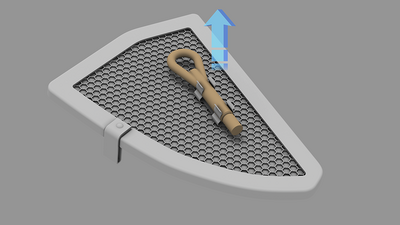
Carefully review the instructions under Towing Device Method before use and consider these limits before using the tow eye.